

Bird Flu Detection: Choosing the Best Swab for Accurate Results
Published by AllSwabs.com on Dec 20, 2024
Choosing the Best Swab for Avian Influenza Sample Collection
Accurate avian influenza testing starts with proper sample collection. The swab you choose can affect sample recovery, transport compatibility, and overall test reliability. For veterinary teams, poultry operations, and diagnostic workflows, the goal is simple: use a sterile swab that matches the collection site, holds up during sampling, and releases the sample effectively for testing.
This guide explains which swab materials are best suited for avian influenza sample collection, when flocked swabs are preferred, when polyester or rayon may be appropriate, and which swab types are generally not recommended for diagnostic accuracy.
Start here: Browse sterile flocked swabs
Quick Answer: Which Swab Should You Use?
- Flocked swabs are often the best overall choice for avian influenza sample collection because they provide strong sample uptake and release.
- Polyester swabs are a strong option when you need synthetic material compatibility and dependable field or lab handling.
- Rayon swabs may be used in some viral collection workflows when compatible with the test method and transport media.
- Foam and cotton swabs are generally not the preferred choice for this type of diagnostic sampling.
| Swab Material | Sample Uptake | Sample Release | Best Fit | Recommended? |
|---|---|---|---|---|
| HydraFlock / Nylon Flocked | Excellent | Excellent | Diagnostic sampling, virology, avian influenza testing | Yes |
| Polyester | Good | Good | Field and lab collection workflows | Yes |
| Rayon | Good | Good | Some viral and bacterial collection workflows | Usually |
| Foam | Low | Moderate | Specialty cleaning and non-diagnostic tasks | Not preferred |
| Cotton | Low | Low | General-purpose use, not ideal for diagnostic collection | Not preferred |
| Synthetic Shaft (Plastic or Aluminum) | N/A | N/A | Sample handling and transport compatibility | Yes |
Why Swab Choice Matters
Not all swabs perform the same way in diagnostic collection. In avian influenza workflows, swab design affects how well the sample is collected, how easily it is released into transport media, and how well the overall sample holds up during handling and testing.
Key factors include:
- Sample recovery: Better uptake and release can improve downstream testing reliability.
- Sterility: Sterile swabs help reduce contamination risk during collection.
- Material compatibility: Synthetic materials are generally preferred for viral collection workflows.
- Protocol fit: The swab should align with the collection site, transport media, and lab method being used.
Best Swab Types for Avian Influenza Collection
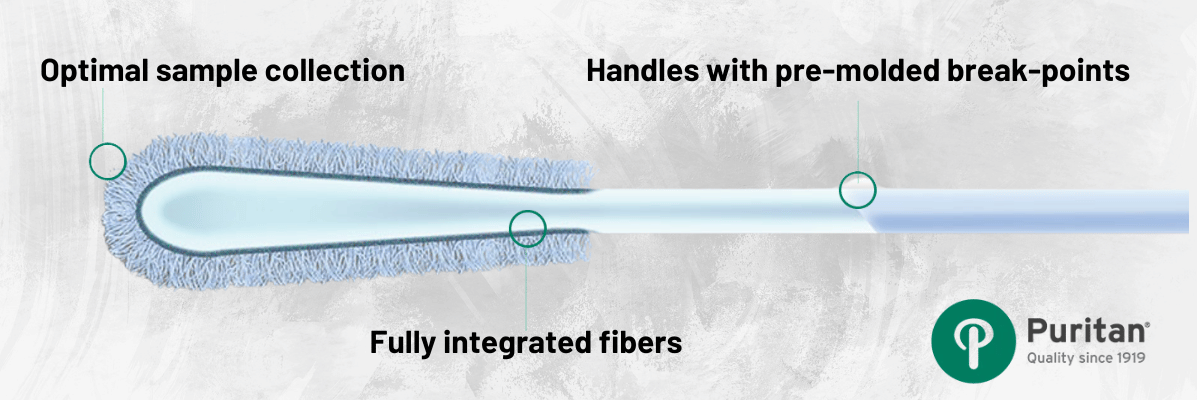
1. Flocked Swabs
Sterile flocked swabs are often the leading choice for avian influenza collection because their brush-like tip is designed for efficient sample capture and release. This makes them especially attractive for diagnostic and virology workflows where maximizing sample recovery matters.
- Pros:
- Excellent sample uptake and elution
- Synthetic construction suited to diagnostic workflows
- Commonly used in virology and specimen collection
- Best fit: Diagnostic swab collection where efficient release into media is important
2. Polyester-Tipped Swabs
Polyester swabs are another strong option because they are synthetic, durable, and widely used in medical and laboratory settings. They are especially useful when you need a practical swab for field collection or lab handling.
- Pros:
- Good compatibility with transport workflows
- Durable for field and lab handling
- Synthetic material preferred over cotton in many testing workflows
- Best fit: Field and lab use where dependable synthetic construction is needed
3. Rayon Swabs
Rayon swabs are also used in viral collection workflows and can be appropriate depending on the testing method and collection protocol. They share some of the benefits of other synthetic materials and may be selected when flocked or polyester is not the primary option.
- Pros:
- Good sample absorption and release
- Compatible with many specimen collection workflows
- Best fit: Viral and bacterial collection workflows where rayon is accepted by protocol
4. Foam Swabs (Not Preferred)
Foam swabs are useful in some cleaning and application tasks, but they are generally not the preferred choice for avian influenza diagnostic collection.
5. Cotton Swabs (Not Preferred)
Cotton swabs are generally avoided for avian influenza diagnostic sampling because synthetic swab materials are typically preferred for sample integrity and compatibility.
Best Swab by Use Case
Best Overall for Diagnostic Collection
Sterile flocked swabs are often the best overall choice when sample recovery and release are the top priority.
Best for Field and Lab Flexibility
Polyester swabs are a strong option when you need a practical synthetic swab that can perform reliably in collection and transport workflows.
Best When Following a Specific Synthetic-Swab Protocol
Rayon may be appropriate when your lab or test method accepts it. As always, follow the collection instructions tied to the assay or authority you are working under.
Collection Technique Basics
- Wear PPE: Use appropriate gloves, masks, and protective equipment for the collection environment.
- Follow species-appropriate collection guidance: Collection site can vary depending on bird type and testing protocol.
- Use the approved sterile swab: Choose the swab type specified by your lab, authority, or kit instructions.
- Collect gently and consistently: Avoid unnecessary trauma while ensuring adequate sample contact.
- Place the swab in the correct transport media: Follow required transport and submission procedures for the testing program.
For broader surface disinfection and workflow hygiene around the sampling environment, see Disinfecting Wipes vs. Alcohol Swabs: When to Use Each.
Shaft and Sterility Considerations
Beyond the tip material, shaft material also matters. Plastic or aluminum shafts are commonly preferred for diagnostic collection because they are better suited to handling and transport workflows than wood-shaft alternatives.
Sterility is equally important. For diagnostic use, choose swabs that are individually packaged and sterile whenever required by your collection protocol.
Why This Topic Matters Right Now
Avian influenza remains an active surveillance and testing concern in animal health. That makes durable, protocol-aligned sample collection tools especially important for veterinary, poultry, and laboratory workflows.
Conclusion
Choosing the right swab for avian influenza sample collection helps support sample quality, workflow consistency, and diagnostic confidence. Flocked swabs are often the leading choice, while polyester and rayon may also be appropriate depending on the method and setting. Foam and cotton are generally not the preferred route for this type of testing.
Explore high-quality sterile swabs at AllSwabs.com and equip your team with the right tools for accurate collection.
Frequently Asked Questions
Q1: Can I use any swab for avian influenza testing?
No. The swab should match the testing protocol, collection site, and transport requirements. Synthetic sterile swabs are generally preferred.
Q2: Are flocked swabs better than cotton swabs for diagnostic collection?
In many diagnostic workflows, yes. Flocked swabs are often preferred because they are designed for better sample uptake and release.
Q3: Are polyester swabs acceptable for avian influenza sample collection?
They often are, especially when the method or lab accepts polyester-tipped synthetic swabs. Always confirm against the required protocol.
Q4: Why are foam and cotton swabs not preferred?
They are generally not the first choice for diagnostic viral sampling when synthetic diagnostic swabs are available and specified.