Cotton Swabs: An Insight Into Their History
Published by AllSwabs.com on Dec 03, 2025
Cotton Swabs: An Insight Into Their History
Cotton swabs—often called Q-tips®—are one of those everyday items that quietly live in bathroom drawers, makeup kits, first-aid cabinets, and lab benches. Most people never stop to wonder where they came from or why they became so universally handy. Their story begins with a surprisingly personal moment and evolves into a product that’s now used everywhere from baby care to beauty routines and precision cleaning.
The Origins of Cotton Swabs
The idea for the cotton swab came about when Leo Gerstenzang noticed his wife twisting bits of cotton onto toothpicks to carefully clean around their baby’s ears. It was an improvised tool—clever, but not exactly convenient. Gerstenzang saw an opportunity to make something preassembled, safe, and ready for everyday use. In 1923, he founded the “Leo Gerstenzang Infant Novelty Co.” to produce these early swabs for parents.
The first version was called “Baby Gays,” a name that reflected the product’s focus on infant care. In 1926, the label shifted to “Q-tips® Baby Gays,” and eventually the “Baby Gays” portion was dropped entirely. The “Q” stood for “quality,” a detail that helped position the product as a more reliable choice than homemade cotton-and-toothpick combinations.
The Evolution of Cotton Swabs
As demand grew, production moved from New York City to Long Island City in 1948. By the 1950s, cotton swabs were everywhere—makeup counters, film sets, and household vanities. Q-tips® even partnered with Hollywood makeup artist Ern Westmore to release a booklet called “Lesson in Loveliness with Q-tips®,” reflecting how deeply the product had woven itself into mid-century beauty culture.
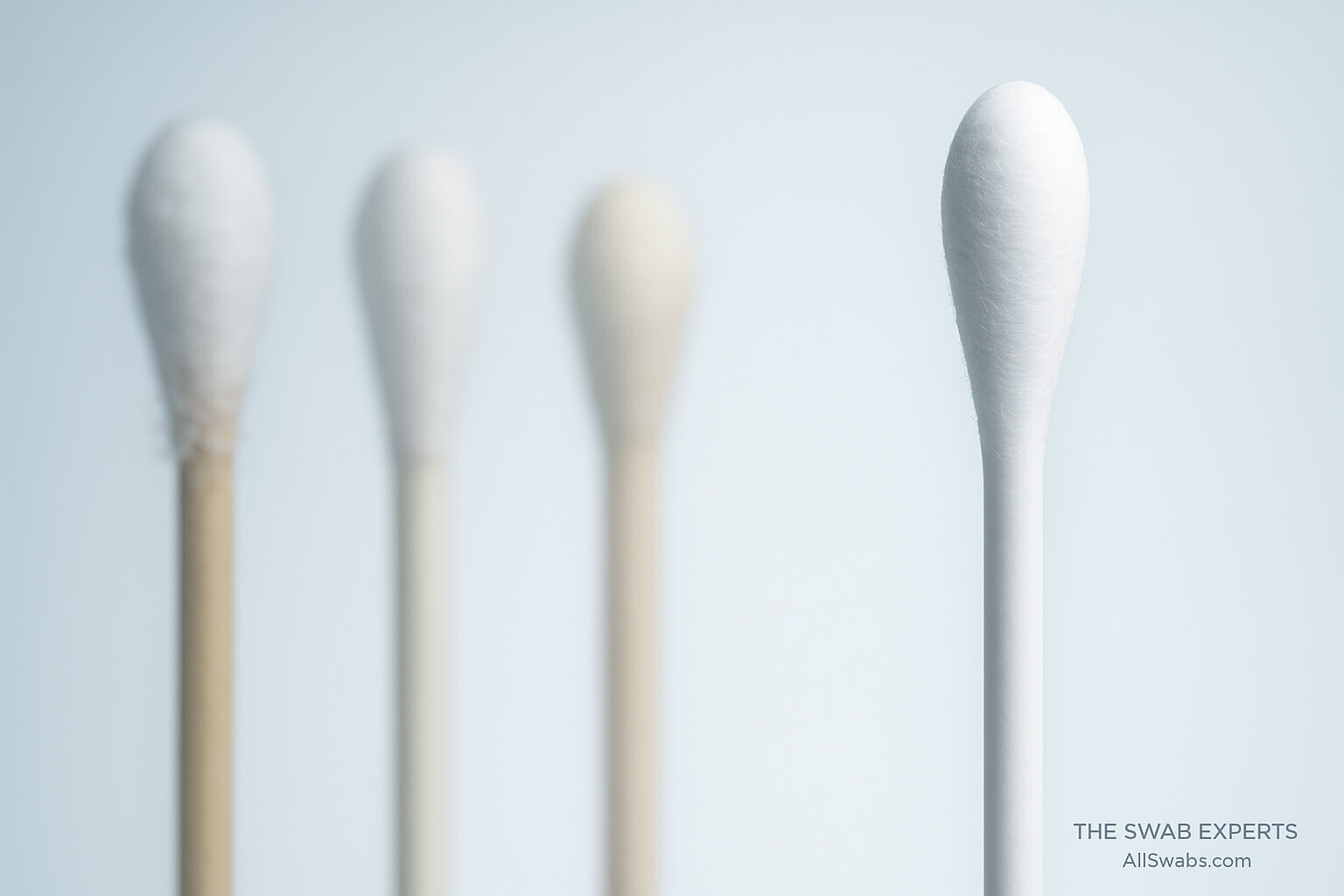
A major change came in 1958 when Q-tips® acquired Paper Sticks Ltd. of England, a company that originally made paper sticks for the confectionery industry. The machinery was brought to the U.S. and adapted to produce paper-shaft cotton swabs, giving consumers a choice between traditional wooden sticks and the now-familiar paper version.
Chesebrough-Ponds took ownership of Q-tips® in 1962, moving operations to Jefferson City, Missouri. That facility handled domestic production for more than a decade before part of the process shifted to Las Piedras, Puerto Rico in 1974.
The brand changed hands again in 1987 when Unilever acquired Chesebrough-Ponds. Under Unilever, Q-tips® expanded into specialty products such as the Vanity Pack and antimicrobial cotton swabs, reflecting growing demand for more targeted applications.
Cotton Swabs and the Environment
As sustainability became a bigger concern, cotton swab manufacturers adapted. In 2007, Q-tips® began sourcing paper from sustainably managed forests. A year later, the company shifted to PET plastic for certain components, signaling a slow but ongoing move toward eco-friendlier materials.
Other manufacturers, including Puritan Medical Products, focused on renewable materials such as birch wood. Wooden shafts have become especially popular in laboratories, cleanrooms, and industrial environments because they're sturdy, locally sourced, and biodegradable.
The Controversy of Cotton Swabs
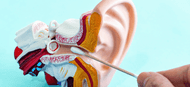
For all their usefulness, cotton swabs have long been at the center of debate—especially when it comes to ear cleaning. Many people reach for one the moment they feel a wax blockage or itch. It’s almost instinctive. But doctors consistently warn against putting cotton swabs inside the ear canal.
According to otologist Dr. Yu-Tung Wong, the risk is real: swabs can push wax deeper, injure the ear canal, or even puncture the eardrum. Severe injuries can lead to long-lasting vertigo, hearing loss, altered taste function, or—in rare cases—facial paralysis.
And accidents don’t just happen during careless use. One reported case involved a patient who inserted the swab only slightly too far, causing sudden pain and bleeding. The eardrum was almost completely destroyed, illustrating how little pressure it takes to cause major damage.
Conclusion
From a homemade baby-care tool to a worldwide staple, cotton swabs have had a long and interesting journey. They're still one of the most versatile household and professional tools around—just not for cleaning inside the ear. When it comes to earwax or hearing concerns, a healthcare provider, not a cotton swab, is the safer choice.