Alcohol Swabs vs. Disinfectant Wipes: When to Use Each
Published by AllSwabs.com on Dec 03, 2025
Alcohol Swabs vs. Disinfectant Wipes: When to Use Each
Alcohol swabs and disinfectant wipes are two of the most common cleaning tools found in clinics, homes, and workplaces. They often sit side-by-side in medical rooms, first-aid kits, and lab benches—which makes it easy to assume they’re interchangeable. But the truth is that each product is designed for a very different purpose. Knowing when to use an alcohol prep pad and when a disinfectant wipe is the safer choice can improve infection control, cleaning efficiency, and patient safety.
What Alcohol Swabs Are Designed For
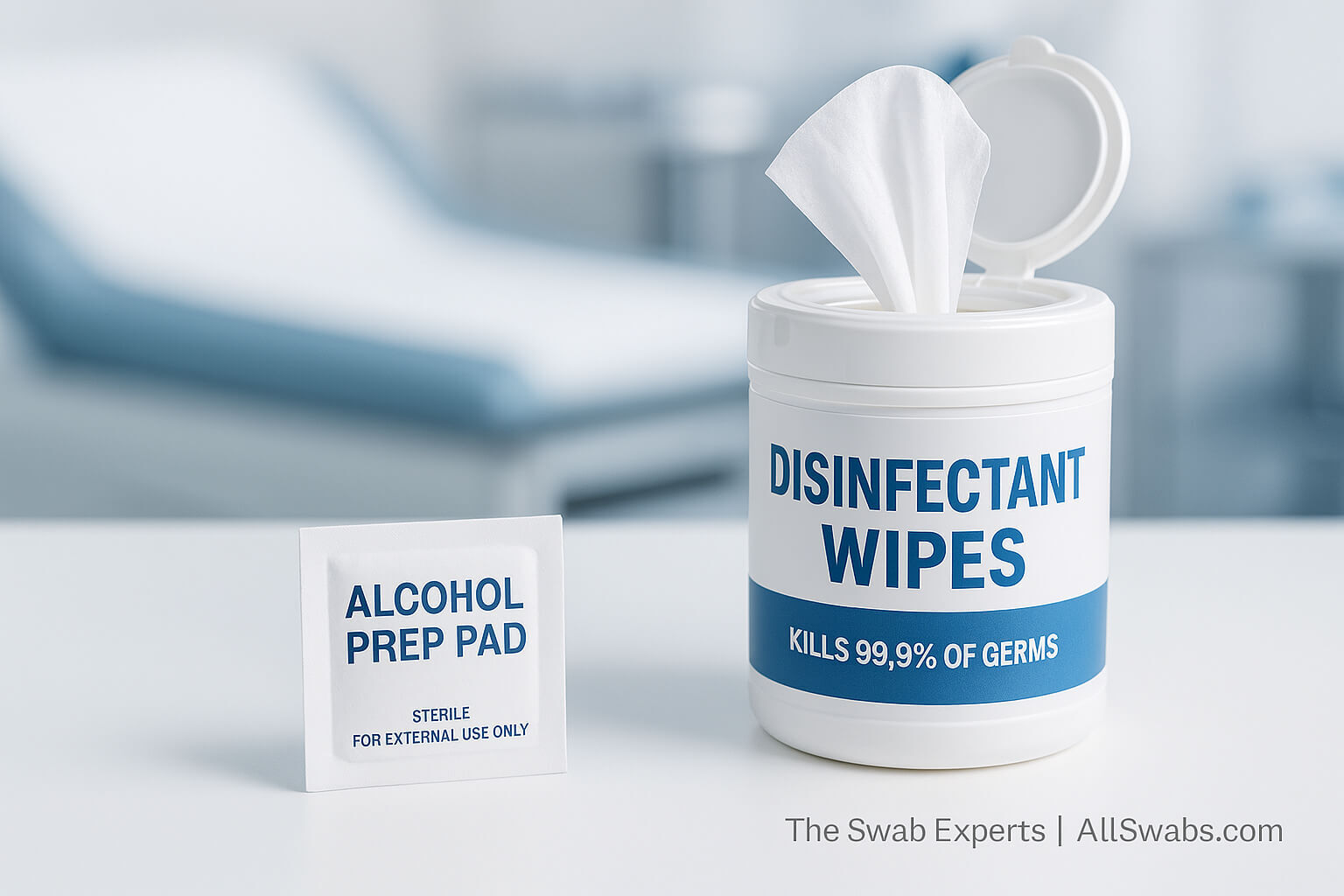
Alcohol swabs—also known as alcohol prep pads—are small, individually wrapped pads saturated with 70% isopropyl alcohol. They’re sterile, single-use, and made specifically for preparing skin or cleaning small items where a fast-evaporating solution is ideal. Because they leave no residue and dry within seconds, alcohol swabs are a trusted choice for minor medical procedures and quick cleanups.
Common Uses for Alcohol Swabs
- Preparing skin before injections or finger sticks
- Cleaning thermometers, tweezers, or small medical tools
- Removing adhesive residue from dressings or bandages
- Quickly cleaning personal devices that can tolerate isopropyl alcohol
Because alcohol pads are designed for skin contact, they’re ideal for first aid kits, diabetic testing kits, and clinical prep stations. If you want to explore options, you can find a range of alcohol swabs on AllSwabs.com, including sterile medical-grade choices for professional settings.
What Disinfectant Wipes Are Designed For
Disinfectant wipes are larger, stronger, and formulated for sanitizing environmental surfaces—not skin. These wipes are pre-saturated with EPA-registered disinfectants, which may include quaternary ammonium compounds (quat), hydrogen peroxide, alcohol blends, or multi-surface cleaning agents. They’re used in healthcare facilities, offices, schools, food-service environments, and anywhere high-touch surfaces need routine cleaning.
Common Uses for Disinfectant Wipes
- Cleaning exam tables, counters, and medical equipment housings
- Disinfecting high-touch surfaces like door handles or light switches
- Routine workplace sanitation (phones, keyboards, shared tools)
- Food-safe cleaning with NSF-certified formulas (depending on the wipe)
While AllSwabs focuses on precision cleaning tools, many customers also pair swabs with high-quality disinfectant wipes. For a broad selection, visit the Medical Disinfectant Wipes category at HarmonyCR.com.
Alcohol Swabs vs. Disinfectant Wipes: Key Differences
Although both products help control germs, they’re built for different jobs. These are the distinctions that matter most when deciding which one to use:
- Skin vs. Surfaces: Alcohol swabs are meant for skin prep; disinfectant wipes are formulated for nonporous surfaces.
- Chemical Strength: Alcohol pads contain 70% isopropyl alcohol. Disinfectant wipes use broader-spectrum formulas and often carry EPA-registered kill claims.
- Coverage: Alcohol pads are small and precise; disinfectant wipes are larger and designed for high-touch areas.
- Drying Time: Alcohol dries fast; disinfectant wipes require “contact time” to work effectively.
- Safety: Disinfectant wipes should never be used on skin, and alcohol pads should not be relied on for full room or equipment disinfection.
When to Use Alcohol Swabs
Choose alcohol swabs when you need quick, targeted cleaning. They’re ideal for:
- Prepping skin before injections
- Cleaning small instruments
- Removing oils before applying adhesives or bandages
- Cleaning compact electronics like earbuds or remote controls
If you need sterile, medical-grade swabs, browse our selection of medical swabs and cotton swabs for precise skin prep and controlled absorption.
When to Use Disinfectant Wipes
Use disinfectant wipes when you need broad-spectrum cleaning or frequent sanitizing of shared surfaces. They’re especially useful in:
- Healthcare environments and medical exam rooms
- Workplaces with shared equipment or desks
- Schools, gyms, and daycare centers
- Kitchens and food-preparation areas (with certified wipes)
For surface-specific cleaning tasks that require precision tools, explore AllSwabs’ industrial swabs, including lint-free, foam-tipped, and solvent-compatible swabs.
Common Mistakes to Avoid
- Using disinfectant wipes on skin. These formulas can cause irritation and are not designed for human contact.
- Trying to clean large surfaces with alcohol pads. They evaporate too quickly and don’t provide complete coverage.
- Ignoring disinfectant "contact time." Wipes must remain visibly wet on a surface for a specified duration to kill pathogens effectively.
- Relying on alcohol pads alone for equipment disinfection. They are not a full substitute for EPA-registered wipes.
How to Choose the Right Product for Your Setting
For Medical Professionals
Use alcohol swabs for patient skin prep and small tools; rely on disinfectant wipes for environmental cleaning, exam tables, and nonporous equipment surfaces. Many facilities also use sterile swabs to maintain compliance in controlled environments.
For Homes
Alcohol pads are great for first aid, electronics, and occasional small cleanups. Disinfectant wipes remain the best choice for kitchen counters, bathroom fixtures, and high-touch household surfaces.
For Workplaces
Shared workstations, breakrooms, and meeting spaces benefit from routine wipe-downs with disinfectant wipes. For delicate instruments, use foam swabs or polyester swabs that won’t leave lint behind.
Conclusion: Use Each Product for Its Intended Purpose
Alcohol swabs and disinfectant wipes both play an important role in cleaning and infection control, but they serve very different needs. Alcohol pads are best for skin prep and small, targeted cleaning tasks. Disinfectant wipes are built for surfaces, equipment housings, and daily sanitizing routines. Choosing the right tool helps maintain safety, improves cleaning outcomes, and reduces cross-contamination risks.
Explore AllSwabs.com for cotton, foam, and lint-free swabs—or pair your swabs with effective surface cleaners by visiting HarmonyCR’s disinfectant wipes collection.